
§ What "featured in an AI answer engine" actually means
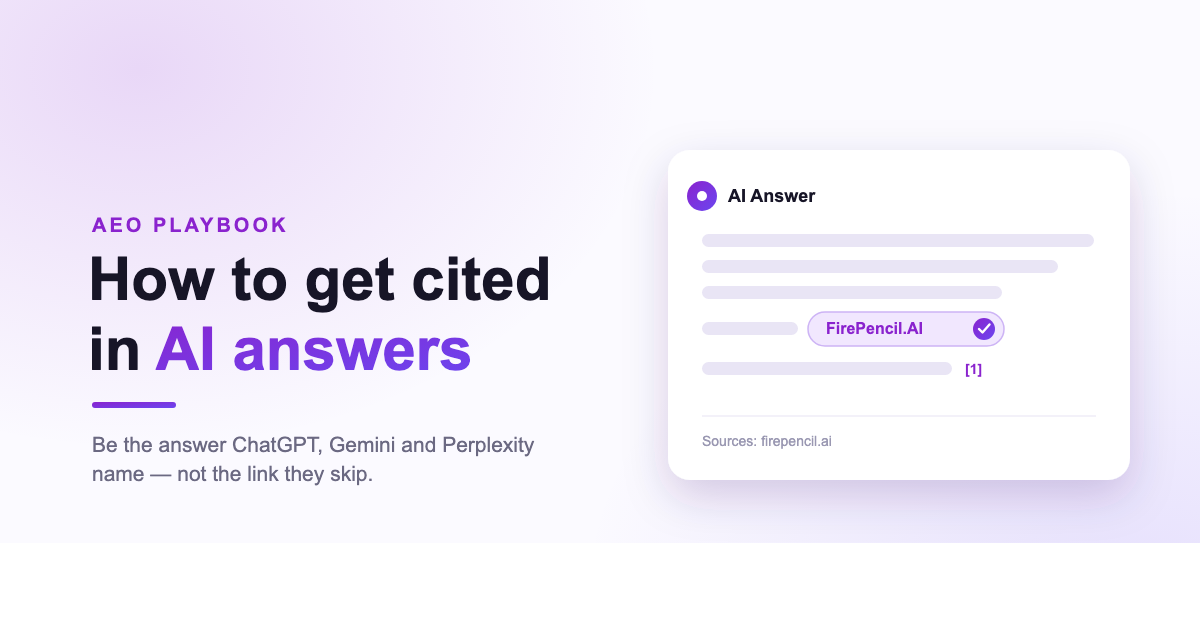
An answer engine, ChatGPT, Google's Gemini and AI Overviews, Perplexity, Claude, doesn't hand back ten blue links. It reads across sources, synthesizes one answer, and names a short list of options, usually two or three. Being "featured" means being one of those named options, ideally with a citation link back to you. That's the new shelf. If your buyers increasingly start their research inside an AI, the brands it names are the shortlist, and everyone else is invisible before the first click.
The uncomfortable part: this is a different game from ranking. So let's clear the biggest misconception first.
§ Why your Google rank doesn't carry over
A #1 Google ranking does not guarantee an AI citation. The overlap between who ranks and who gets named is small, because the two systems reward different things. Search ranks a page against a query. An answer engine assembles a response from whatever it can read, trust and match to the buyer's intent, then attributes it to a few sources. You can own the top of Google and still be absent from the answer above it. (We pull that apart in why a #1 ranking won't get you cited.)
SEO gets you into the list of links. AEO gets you into the answer above the links. You need both, and they are not the same work.
§ The model: SEE → TRUST → RECOMMEND
Before an AI will name you, three things have to be true, in order. This is the frame FirePencil audits against (its 12 AEO pillars group under exactly these three):
1. SEE Can the AI find and read you?
Machine readability first: clean HTML, real text (not image-only or JS-buried content), structured data, a complete llms.txt, and pages that actually contain the answer to the question. If an engine can't parse what you do, nothing else matters.
2. TRUST Can it verify and believe you?
Entity consistency, your name, category, location and facts identical across your site, schema, directories and profiles, plus independent endorsement: third-party mentions, reviews, and a verifiable track record. AI is conservative; it names sources it can corroborate elsewhere.
3. RECOMMEND Will it choose and name you?
Being the clearest match for the specific buyer intent: specialization depth, a distinct standout, and freshness. When two providers look equal, the engine names the one whose relevance and recency are unambiguous.
§ The step-by-step checklist
- Map your buyers' real questions. The 10–25 things a customer actually types when choosing a provider like you, phrased as questions, never your brand name.
- Answer them in structured, machine-readable pages. An answer-first summary up top, question-shaped headings, plain text, and
FAQPage/Organization/Productschema so engines can parse and quote you. - Fix your entity. Make your name, category, services, location and founders identical across your site, schema,
llms.txt, LinkedIn and every directory. Contradictions read as "unverified." - Earn independent signals. Third-party mentions, roundups, reviews and citations, the only real lever on TRUST. AI corroborates before it recommends. (Spot the difference between real AI-search work and the grift.)
- Publish your
llms.txt. A plain-text map of your best pages that AI crawlers can read directly, the fastest first step. Ours is at firepencil.ai/llms.txt; build yours free with the llms.txt generator. - Keep it fresh. AI citations decay in weeks as answers re-synthesize. Visibility is an operation, not a one-time project.
- Measure, then repeat. Track whether engines actually name you (next section). Feed what you learn back into steps 1–6.
§ Engine by engine
The foundations are shared, but the emphasis shifts:
- ChatGPT (& ChatGPT Search): rewards clear entity definition and corroboration; its search mode surfaces cited sources, so structured, quotable answers win. See how to make ChatGPT recommend your business.
- Perplexity: the most citation-driven, it names sources inline, so being a crisp, linkable answer to the exact question is what gets you quoted.
- Google Gemini & AI Overviews: closest to classic search signals, but still selects a short set to synthesize; your SEO foundations feed it, your structure and freshness decide it. Google's new gen-AI report is a first look at this, covered in our Search Console AI-report guide.
- Claude: conservative and trust-weighted, entity consistency and verifiable claims matter most.
§ How to know it's working
Don't trust a single "AI visibility score." AI answers are unstable, the same prompt re-run can return a different list. The honest method: fix your prompt set, run it repeatedly on a schedule across engines, and track how often you're named against your own baseline, not an absolute number. (The full method is in how to actually read an AI visibility score and where the GSC for LLMs is.)
Or have an agent do all of it, and keep it done
FirePencil.AI is the autonomous AEO agent: it audits your brand across the 12 SEE-TRUST-RECOMMEND pillars, executes the fixes on your site, schema, citations and entity, weekly and owner-approved, and tracks your citation frequency across ChatGPT, Gemini and Perplexity the honest way, with your SEO foundations maintained in the same engine.
§ Frequently asked questions
How do I get my brand featured in AI answer engines?
Is getting cited in AI the same as ranking on Google?
How is AEO different from SEO?
How do I know if AI is recommending my brand?
FirePencil.AI is an autonomous AEO agent. This guide is general information, not a guarantee of any specific result; AI answer engines change their behavior frequently. Third-party names (ChatGPT, Gemini, Perplexity, Claude, Google AI Overviews) are trademarks of their respective owners; use is descriptive and does not imply affiliation or endorsement.